Key Takeaways from our Exchange on the German Science and Humanities Council’s Vision for Academic Personnel Structure Reform
by Dr. Yves Klinger (Spokesperson WG Advocacy) and Dr. Samuel Tickell (Member WG Advocacy & head of focus group WissZeitVG)
In March, the GPN hosted a discussion with Dr. Insa Großkraumbach, head of the German Science and Humanities Council’s (Wissenschaftsrat, WR) Department of Tertiary Education, on the future of academic personnel structures in Germany. This exchange followed the WR's publication of a position paper in 2025 which calls for a fundamental transformation of academic personnel structure in Germany – aimed at making the structures more transparent, attractive, and internationally competitive. Now, during the joint event, Dr. Insa Großkraumbach explained the key points of the 2025 position paper and elaborated on the discussions that followed its publication thus far.
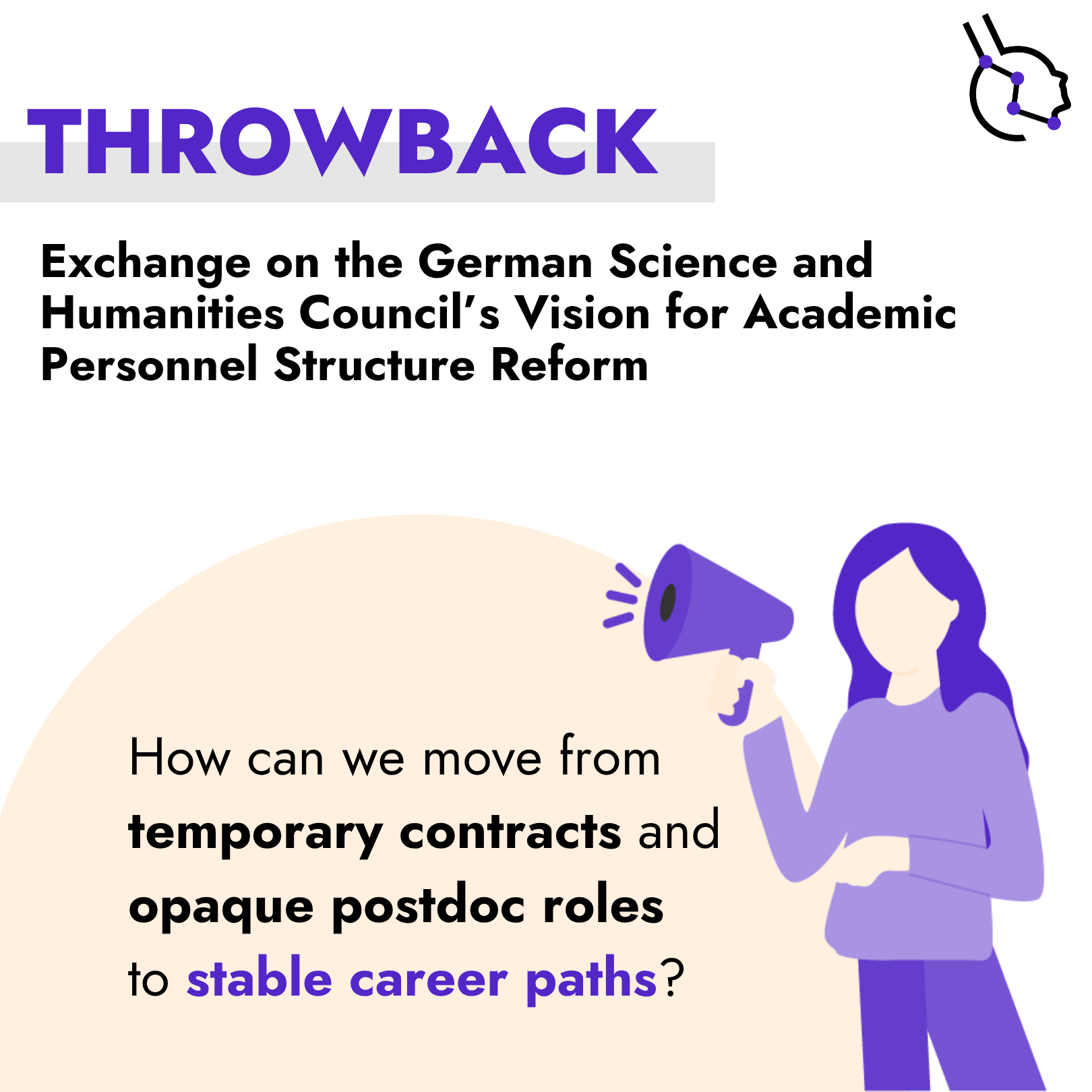
Together, we discussed one of the most pressing questions on reform: How can we move from temporary contracts and opaque postdoc roles to stable career paths? The WR’s position paper proposes staged career levels (S1–S4), but what will it take to implement them? Here’s what stood out to us from the discussion:
- Permanent Positions: “More security without losing mobility”, is it possible? Dr. Großkraumbach shared insights on balancing job stability and academic mobility. More permanent positions apart from the professorship will offer opportunities for researchers to move between institutions if implemented across the German research landscape.
- Who Moves First? Universities, funders, or policymakers? The debate on responsibility and incentives for change is heating up. Some institutions have already implemented similar career progressions, but funders and policymakers can provide incentives for change.
- Postdoc Agency: Postdocs aren’t just affected by reform, they can drive it. How? By engaging in policy discussions, pushing for transparent criteria, and demanding structural accountability – be part of it by joining the GPN!
- Next Steps: The Wissenschaftsrat clearly supports improving conditions for early-career researchers in Germany, but what’s the roadmap for turning these recommendations into reality? Changes will take several years to be implemented, but policy decisions like the upcoming reform of the WissZeitVG set the frame for future improvements.
The exchange was moderated by Dr. Yves Klinger, spokesperson of the GPN working group advocacy, and Dr. Samuel Tickell, member of the GPN working group advocacy and head of its focus group WissZeitVG.
The exchange provided a fascinating insight into the upcoming period for postdocs in Germany. What struck me most was how familiar so many of the examples and concerns sounded to the postdocs in the room – regardless of institution or discipline. Listening to the Q&A, I was surprised (in a good way) by how clearly a willingness to change came through: a real acknowledgement that the current mix of short‑term contracts, opaque career paths and constant mobility pressure is not sustainable, and that more attractive, transparent and functionally differentiated roles are needed. The emphasis on balancing security and mobility – linking permanent roles to permanent tasks while still enabling international and intersectoral moves – resonated very strongly with my own experience and with many of the questions that came from the audience. I also left with the sense that postdocs are not just “objects” of reform, but potential agents of it. In that context, I am really proud of what the German Postdoc Network is building: a national platform that connects postdocs across institutions, represents our interests in policy debates, and helps ensure that our experiences feed into how recommendations like this position paper are implemented on the ground. The discussion underlined how important strong postdoc networks are if we want to monitor new personnel structures locally and keep early‑career realities visible in decision‑making.
There is still a long road from recommendation to reality, but the exchange showed that there is political will, that the concerns are heard, and that we as postdocs have meaningful next steps we can take locally and collectively. The recognition of the need for change on all levels featured among the most important takeaways of the participants as well. Moreover, the participants left with the impression that "openness to change is perhaps higher than expected" and "hope for change in my career time".
Further information
As we detailed in our August blog post, the WR proposes a new career framework with four categories (S1-S4) designed to create more transparent pathways, increase the number of permanent positions, and make German academia more competitive internationally. The paper emphasizes that not every academic career needs to aim at a professorship, and calls for attractive, permanent positions at the S3 level for established researchers who take on long-term responsibilities in teaching, research infrastructure, or science management. The proposal also recommends strengthening or introducing department structures to replace the traditional German "Lehrstuhl" system, aiming for more collaborative and transparent working environments with shared positions and decision-making, e.g. when hiring staff.
Read more details on the WR’s position paper here and access the document here.