Theme Week 2026 - Key Insights from Symposium II
Implementing Personnel Structure Development in Science – Challenges and Solutions
How can universities and research institutions create sustainable, transparent, and attractive career paths for researchers? And how can an improved personnel structure development become a reality in everyday academic life?
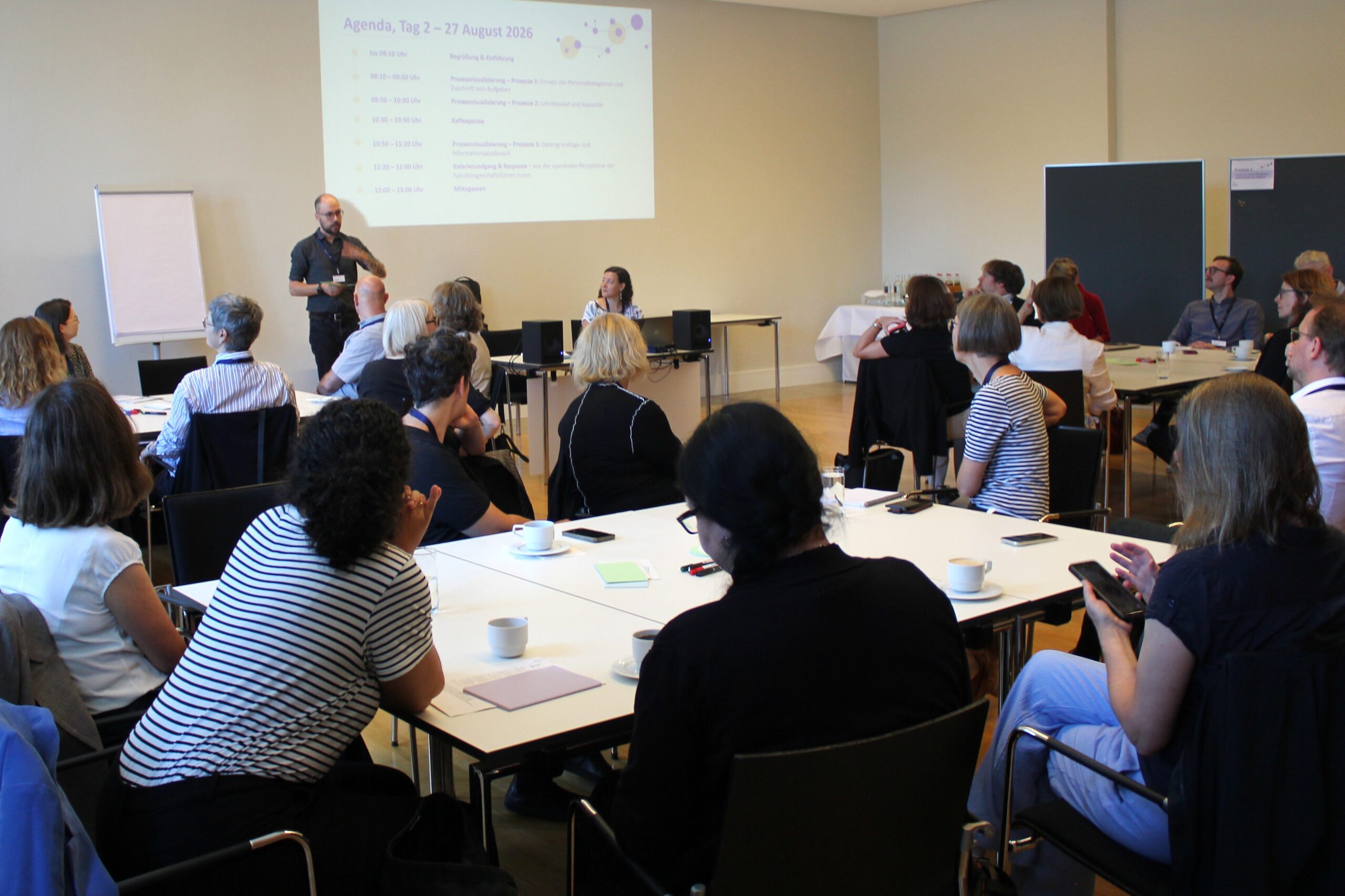
These questions were at the heart of the symposium “Implementing Personnel Structure Development in Science – Challenges and Solutions” as part of our Theme Week 2026. The symposium aimed to discuss sustainable staff structure development at universities in order to clarify academic career paths, utilize resources efficiently, and create conditions for research and teaching that are fair to all generations. In this blogpost, we present the symposium's central insights and recommendations. For a more comprehensive overview of the discussions, findings, and proposed solutions, the full symposium report is available via the link at the end of this post.
Current debates – sparked by initiatives such as #ichbinHanna, the amendment to the Academic Fixed-Term Contracts Act, and position papers from academic organizations and associations – show that the German academic system is undergoing a process of reform. Although staff development has gained importance since the introduction of the tenure-track program, there has so far been a lack of systematic approaches that also encompass the development of staffing structures.
In fact, issues relating to the development of academic staff structures have so far been addressed only in isolated cases and frequently within individual institutions and areas of responsibility. At the same time, there is a lack of established best-practice examples and suitable formats for a discourse that transcends institutional and status group boundaries.
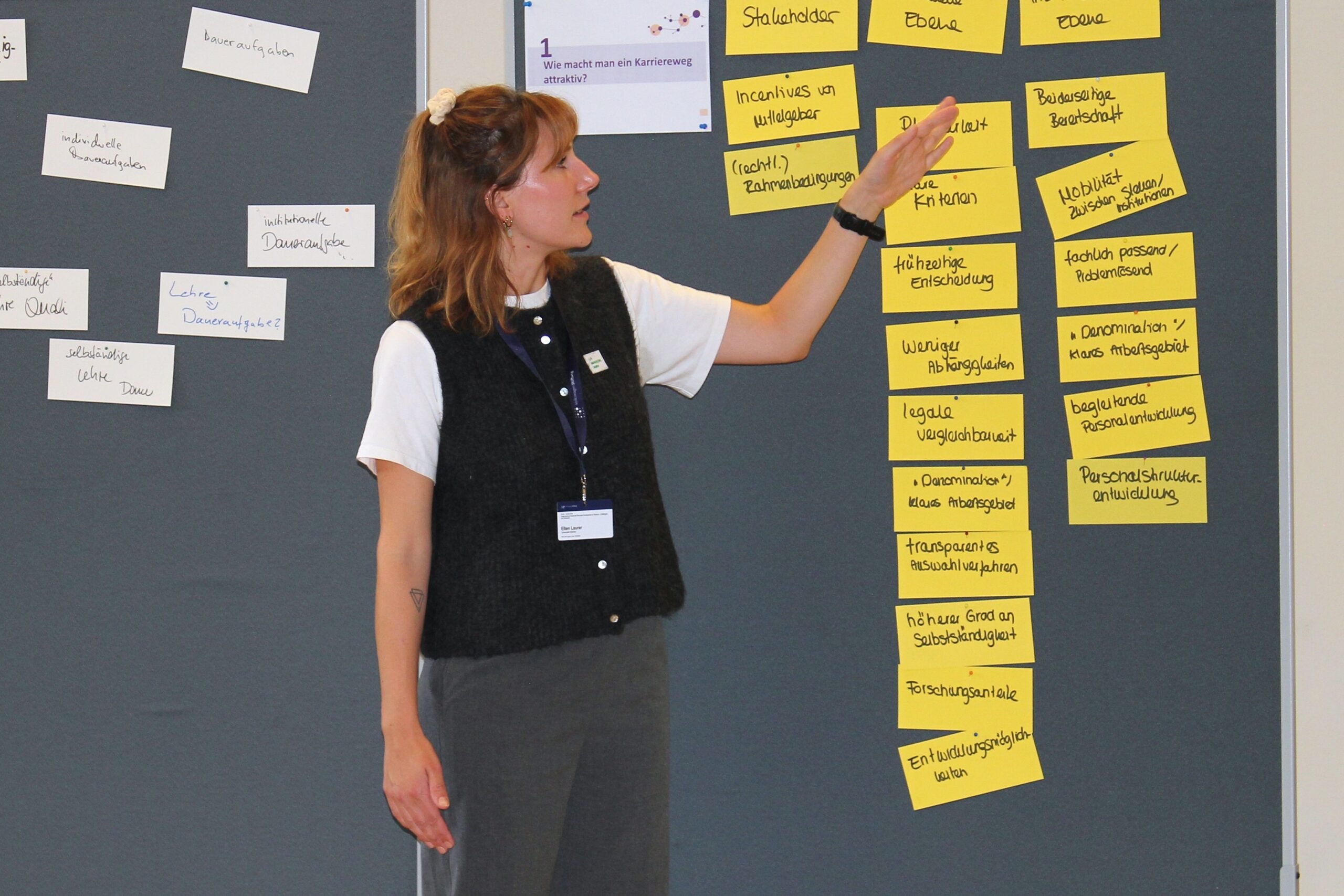
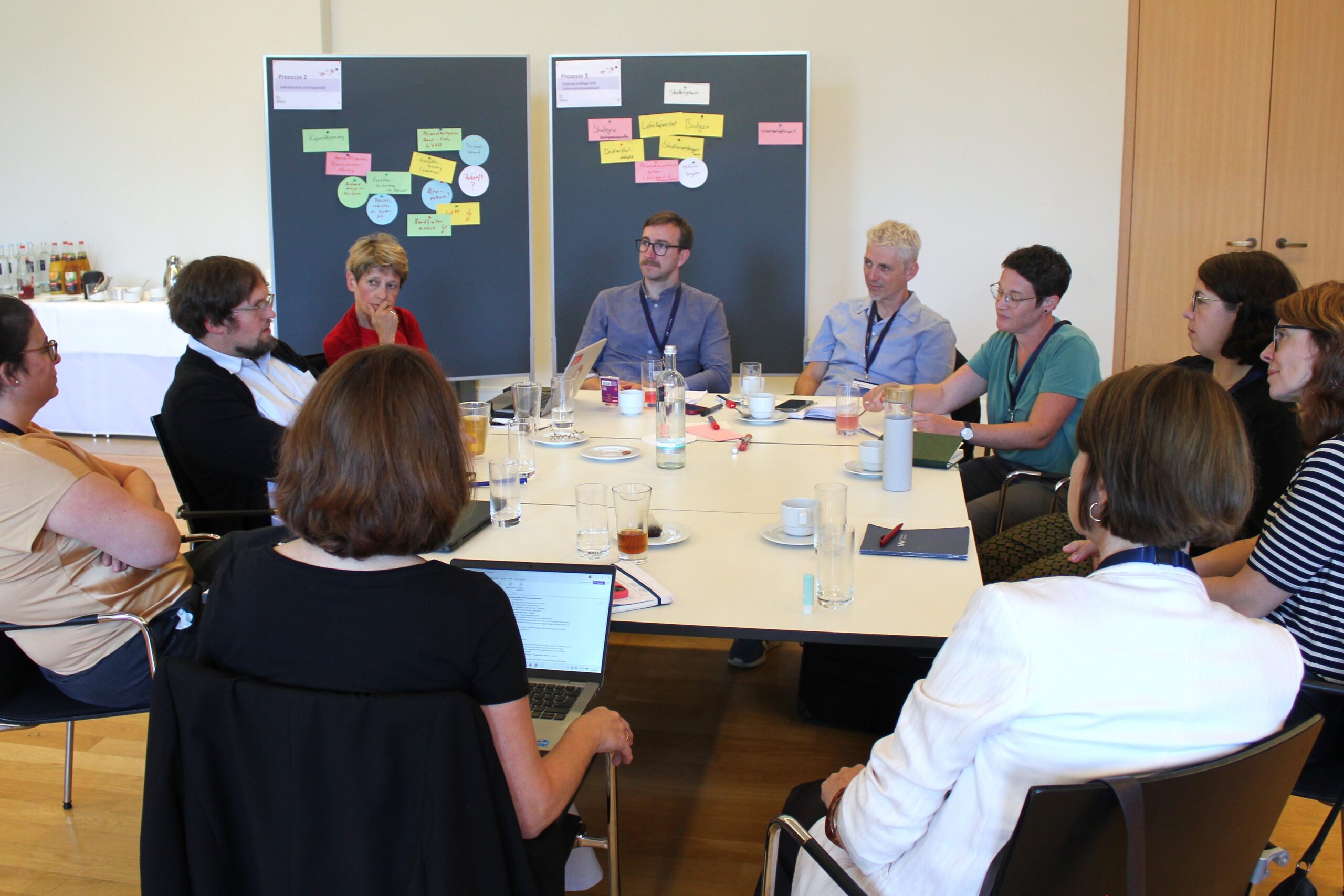
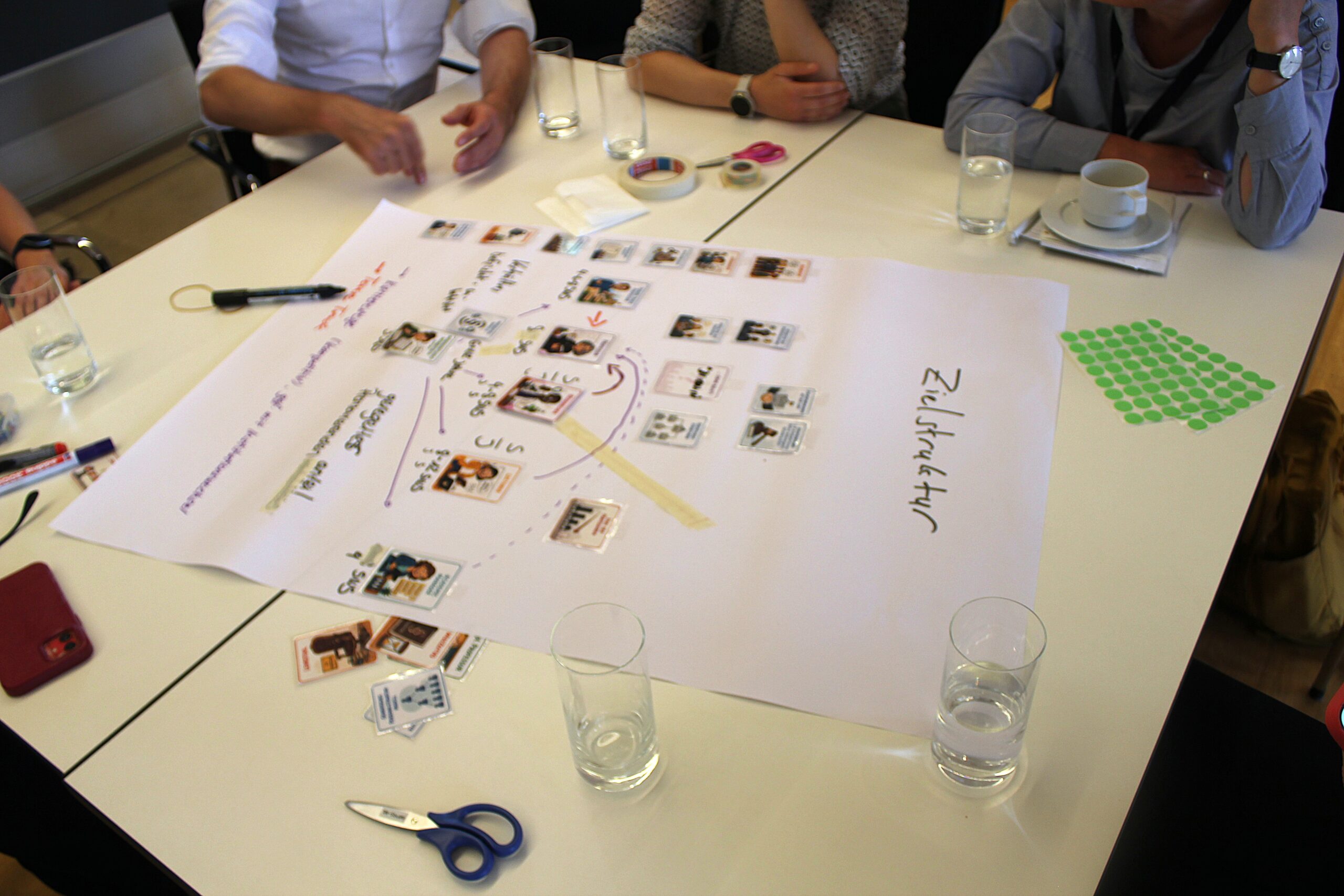
The symposium addressed this gap by facilitating a structured exchange between stakeholders who rarely have the opportunity to collaborate or exchange perspectives in their day-to-day work. It brought together diverse disciplinary, institutional, and experience-based perspectives across fields of work and career stages. This made it possible to identify key challenges, highlight existing approaches, and formulate recommendations for the further development of sustainable academic staff structures.
But what are the key findings, and which approaches offer promising solutions for turning shared ambitions into lasting institutional change? The participants formulated a set of demands, no-go's and implementation steps for the redesign of staffing and career structures at universities in Germany:
Four key demands:
- Introduction of permanent positions alongside professorships, in which academics teach and conduct research independently. There should be standardized definitions nationwide for these permanent positions (e.g. Lecturer, Researcher, Science Manager).
- Elimination of the staffing allocations for professorships, which are negotiated on a case-by-case basis at the time of appointment. Instead, academic and academic support staff should be assigned to larger units (e.g. departments).
- With reference to the European framework for academic career stages, fixed-term employment should be the norm in the first (R1 First Stage Researcher) and second (R2 Recognized Researcher) stages, whilst permanent employment should be the norm in the third (R3 Established Researcher) and fourth (R4 Leading Researcher) stages.
- Regarding higher education funding, the share of base funding should be increased in order to create a stable financial foundation for the necessary increase in the proportion of permanent positions.
Three structural no-go's:
- Teaching staff iwith special duties (Lehrkräfte für besondere Aufgaben) do not constitute a category in the staff structure of the future, as they are assigned such a heavy teaching load that research cannot be carried out in these positions, thereby turning them into ‘career dead ends’.
- The chair to which a professor is appointed – and whose staffing levels are determined during appointment negotiations – cannot be the central organizational unit of the staffing structure of the future, as it stands in the way of strategic staffing planning that necessarily spans multiple chairs.
- Simply holding universities responsible for implementation on the grounds of their autonomy will not lead to a transformation of staffing and career structures, given the internal decision-making structures (a majority of professors on academic self-governing bodies) and external funding (the threat of funding cuts).
Three concrete implementation steps:
- Universities address the balance between permanent and fixed-term employment as part of transparent staff structure planning.
- For staff selection, universities introduce transparent selection procedures to ensure that positions can no longer be filled on an individual basis.
- For academic qualification, particularly at the doctoral stage, universities shall separate the roles of supervision and assessment in order to avoid relationships of dependency.
Short version of a report compiled by: Dr Vanessa Adam, Dr Roland Bloch, Dr Silvana Burke, Dr Camila Hernández Frederick, Dr Linda Jauch, Dr Christian Kny, Ellen Laurer, Dr André Stiegler, Dr Michael Wutzler
Photos: (c) Dr Papon Kumar Dev
Further information
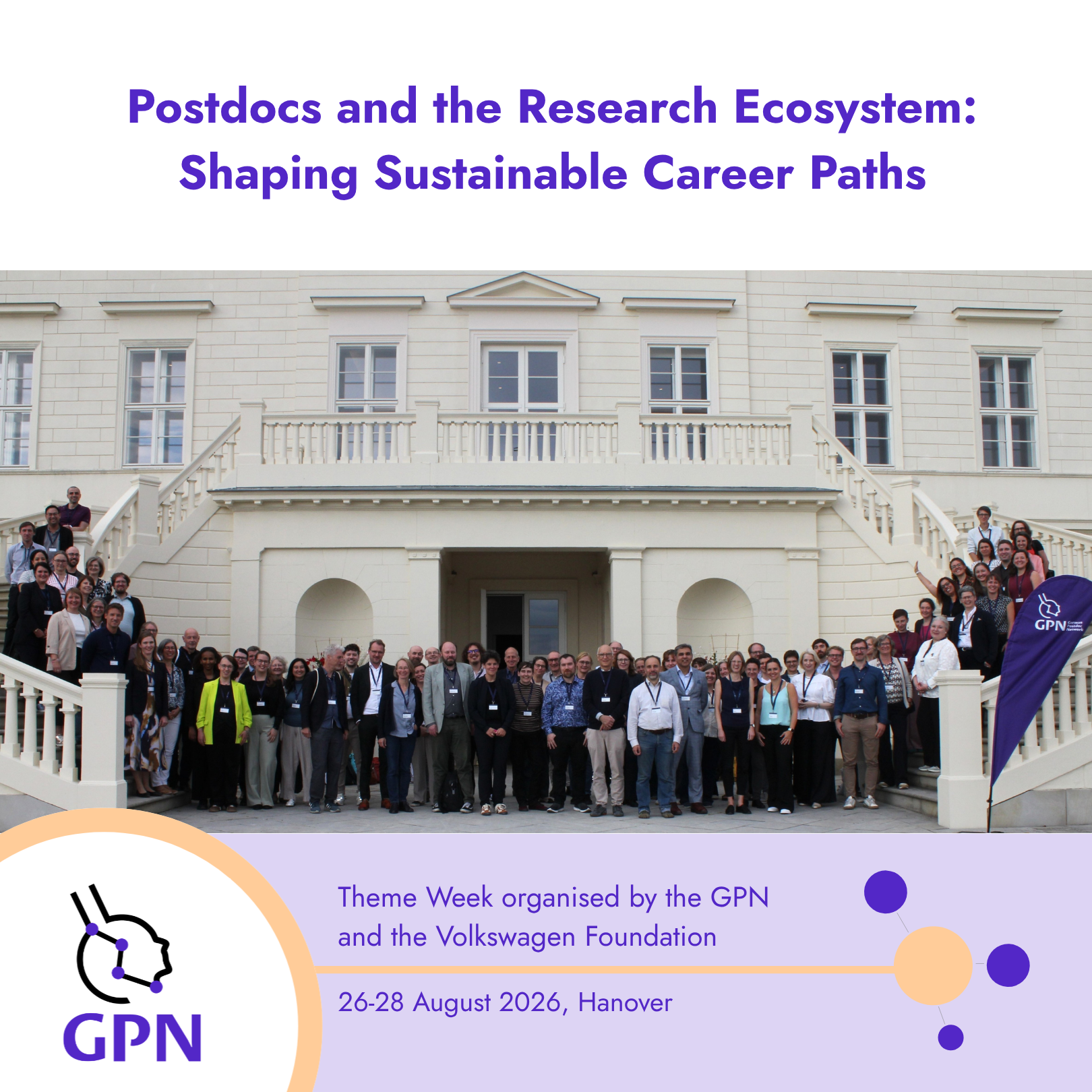
Organized with the Volkswagen Foundation, our Theme Week "Postdocs and the Research Ecosystem: Shaping Sustainable Career Paths" addressed the future of academic careers in Germany, specifically the structurally undefined postdoctoral phase. By uniting academia, politics, and funding bodies, the event developed practical solutions for more reliable and diverse career trajectories. Based on recommendations given by the the German Science and Humanities Council (Wissenschaftsrat, WR), three symposia explored postdoc definitions, staffing models, and intersectoral mobility, complemented by a keynote, a world café, and a public panel. Find the full report and more information about the event on this page.